 713-261-5232
How to Prepare Appliances for Junk Removal
A practical checklist for disconnecting, clearing, and identifying appliances before a removal crew arrives.
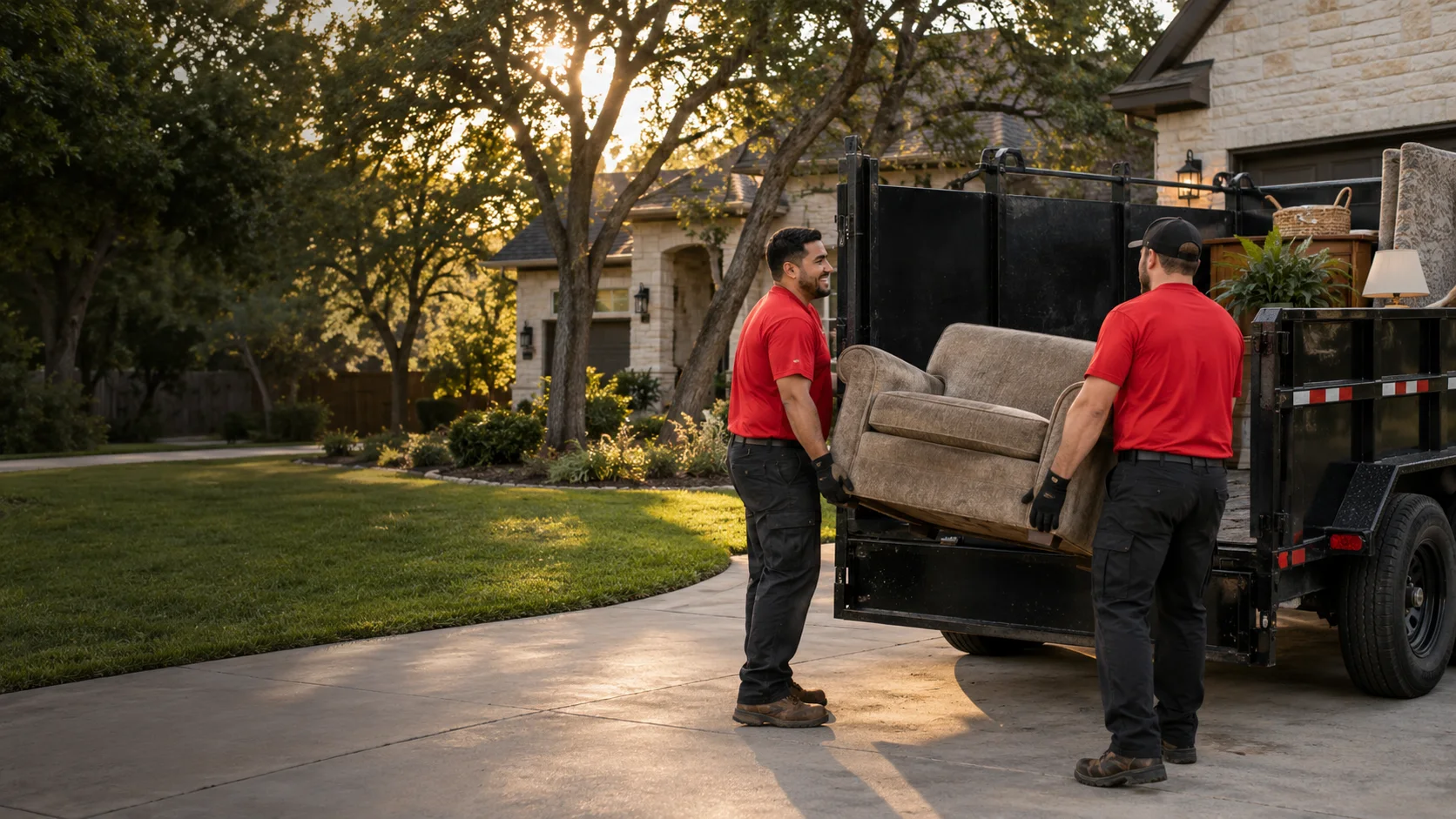
Prepare an appliance pickup by clearing the route, emptying the appliance, and identifying whether it contains refrigerant or is still connected to power, water, or gas. Do not cut lines or vent refrigerant yourself. Tell the removal company what the appliance is and how it is installed before the appointment.
A practical appliance pickup checklist
| Check | What to do | Why it helps |
|---|---|---|
| Identity | List the appliance type, approximate size, and floor. | The crew can plan equipment, people, and truck space. |
| Contents | Remove food, dishes, lint, loose racks, and personal items. | Loose contents add weight and can fall during movement. |
| Route | Measure tight doors and note stairs, turns, gates, or elevators. | The crew can judge whether doors or other obstacles need attention. |
| Connections | Say whether it is connected to gas, water, a drain, or a hardwired circuit. | Some disconnections require a qualified trade professional. |
| Condition | Mention leaks, broken glass, rust, pests, or sharp edges. | Damage changes how the item should be handled. |
Refrigerators, freezers, air conditioners, and dehumidifiers
These appliances may contain refrigerant. EPA rules require refrigerant recovery before final disposal, and local collection programs may require proof that recovery was handled properly. The EPA advises consumers to check with their utility, municipality, retailer, or recycler because local programs and acceptance rules differ. See the EPA’s appliance disposal guidance and safe-disposal requirements (retrieved October 16, 2026; United States).
Do not puncture a refrigerant line, remove a compressor, or assume a sticker settles the disposal requirement. Ask the pickup provider how the final disposal chain handles refrigerated equipment.
What not to do before pickup
- Do not move a heavy appliance to the curb if the route or weight makes that unsafe.
- Do not disconnect a gas appliance unless you are qualified to do so.
- Do not tape a refrigerator or freezer fully shut until it is empty and dry; trapped moisture can create odor and mold.
- Do not hide damage, pests, or leaks. The crew needs that information before arriving.
Photos that make a quote more useful
Send one full view of the appliance, one view of its connections, and one or two views of the path to the outside. Include stairs and the narrowest doorway. A tape measure in the frame can help when clearance is tight.
Review the appliance removal service, then send GenX the appliance list and access notes. If several rooms are involved, the load-measurement guide can help organize the rest.
Source note: Federal sources were reviewed on October 16, 2026. Local acceptance, fees, permits, and disposal rules change by jurisdiction and program; confirm them with the responsible local authority or organization.