 713-261-5232
Donate, Recycle, or Haul Away? A Decision Guide for Household Items
A clear way to sort usable items without assuming every charity or recycler accepts the same things.
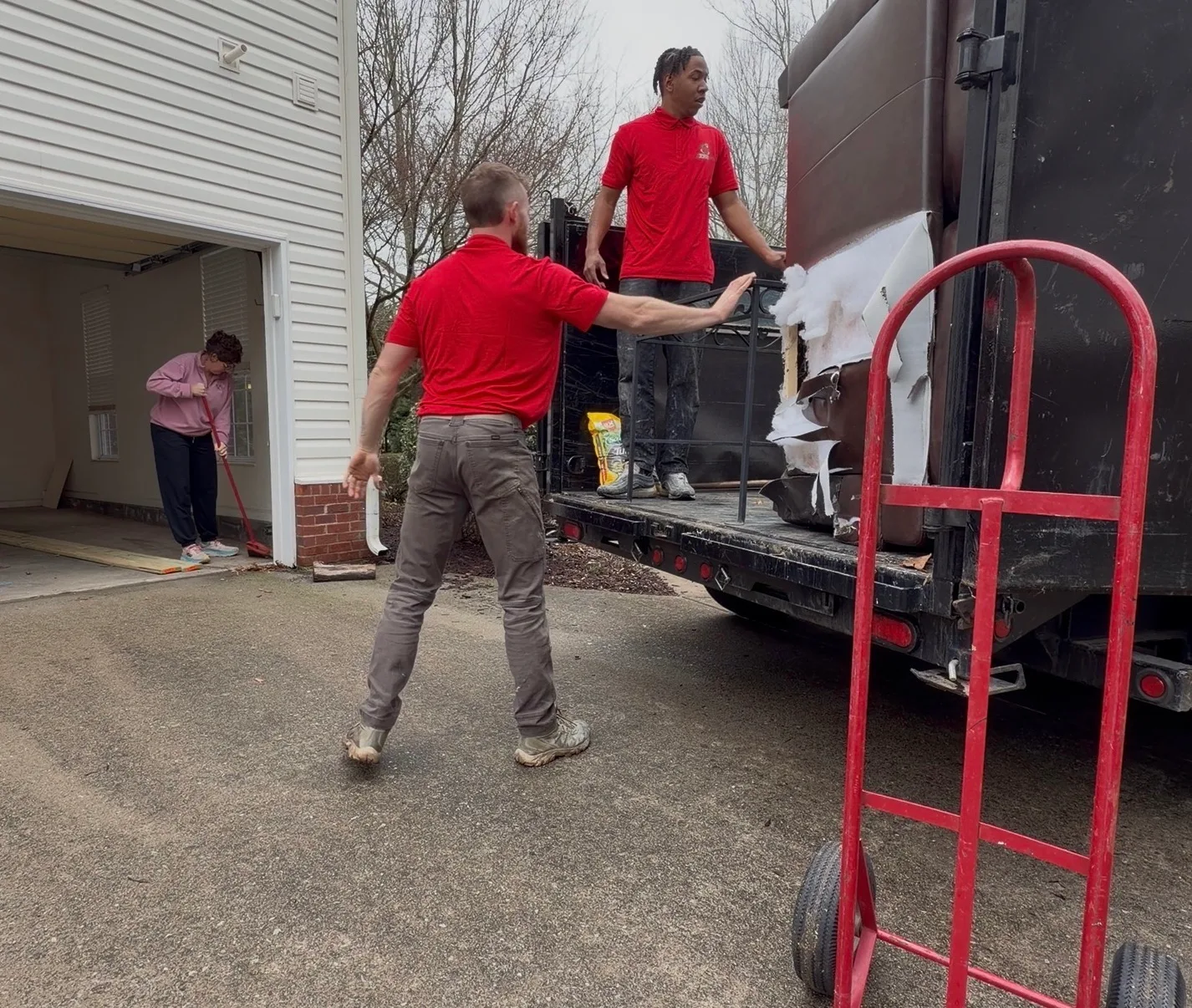
Choose donation when an item is usable and a specific organization confirms it will accept it. Choose recycling when a verified local program handles that material. Choose haul-away when the item is broken, unsanitary, rejected by reuse programs, or part of a larger cleanout that needs one coordinated removal plan.
A simple decision table
| Question | If yes | If no |
|---|---|---|
| Is the item safe, clean, complete, and functional? | Check donation or resale acceptance. | Move to recycling or removal. |
| Has a specific organization confirmed it accepts this item? | Follow its drop-off or pickup rules. | Do not leave it outside or assume acceptance. |
| Does a local program recycle this material? | Check preparation, fee, and location rules. | Ask the removal provider about disposal. |
| Does it contain chemicals, batteries, refrigerant, fuel, or another special material? | Use the correct specialist or local program. | Continue with the ordinary-item decision. |
Donation is an acceptance decision, not a condition label
An item can look useful and still be rejected because of stains, missing parts, recalls, size, storage limits, or local policy. Call or check the current acceptance list before loading a vehicle. For a tax deduction, keep the records required for your situation and review current IRS guidance rather than relying on a pickup receipt alone.
Recycling depends on the material and the local program
Electronics, scrap metal, cardboard, mattresses, appliances, and construction material may have separate routes. Refrigerated appliances have special disposal requirements; the EPA’s consumer appliance disposal guidance explains why utilities, municipalities, retailers, and recyclers may have different programs (retrieved October 16, 2026; United States).
Keep hazardous household products out of every general pile
Paint, cleaners, oils, batteries, pesticides, fuels, and pressurized containers may require local household hazardous waste handling. The EPA recommends checking with local environmental, health, or solid-waste agencies because options are local. See EPA household hazardous waste guidance (retrieved October 16, 2026; United States).
Questions to ask a donation or recycling program
- Do you accept this exact item and condition today?
- Is pickup available, or is it drop-off only?
- Are there size, age, disassembly, or packaging rules?
- Is there a fee?
- What documentation is provided?
- What happens if the item is rejected at arrival?
When coordinated haul-away makes sense
Haul-away is often the practical choice when a cleanout contains a mixed load, the deadline is short, items are not accepted for reuse, or moving the material yourself creates a safety or access problem. The provider still needs to know about special materials before pickup.
Review furniture removal and the items guide. If the job includes several rooms, use the estate cleanout sorting checklist before you request a quote.
Source note: Federal sources were reviewed on October 16, 2026. Local acceptance, fees, permits, and disposal rules change by jurisdiction and program; confirm them with the responsible local authority or organization.